
Demolition and dismantling are named in the statute, and CIS 340 confirms asbestos removal too. Plant is a large share of the invoice, and plant hire comes out of the deduction base — if the invoice identifies it.
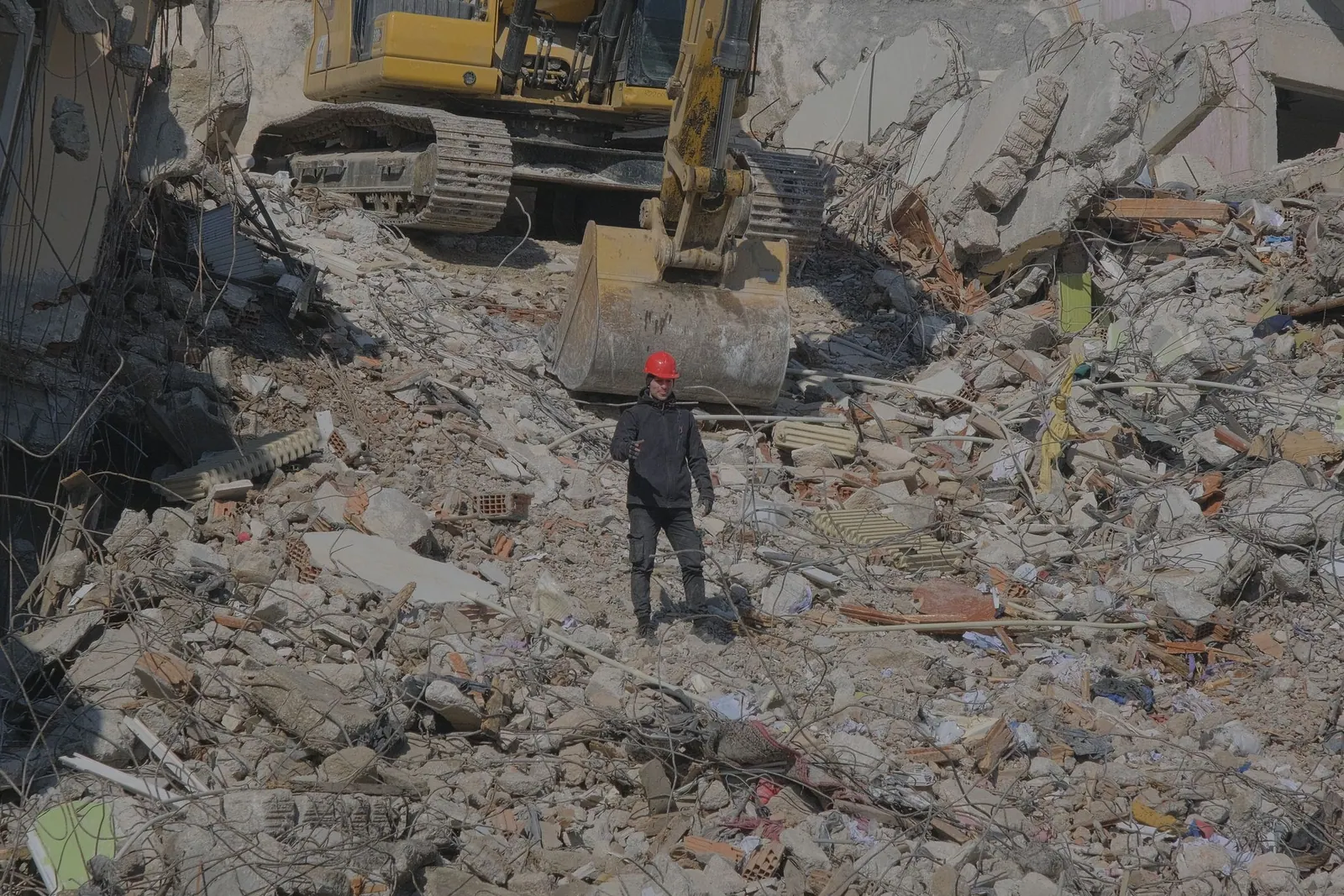
Demolition · CIS scope
Section 74(2) lists the demolition or dismantling of buildings or structures, whether permanent or not, including offshore installations. Site clearance, earth-moving and site restoration are separately listed as operations integral to the works. And CIS 340 additionally confirms asbestos removal as in scope — worth knowing, because licensed specialist work is routinely assumed to sit outside a construction scheme, and it does not.
What is excluded is narrower than you might expect: mineral extraction and the tunnelling or underground works for that purpose; the manufacture of components and their delivery to site; and the professional work of architects, surveyors or consultants.
On a demolition invoice a large share of the value is machines — excavators with attachments, crushers, processors, dumpers. Plant hire costs come out of the payment subject to deduction, along with consumable stores and fuel other than fuel for travelling. That exclusion is worth more on this trade than the materials exclusion is on most, and it only works if the invoice identifies it.
Where you own the plant rather than hire it the exclusion does not apply in the same way — but the capital allowances do. The Annual Investment Allowance gives 100% on up to £1 million of plant and machinery. Companies can also use full expensing, uncapped, on new and unused main-rate plant. From 1 January 2026 a 40% first-year allowance is available to unincorporated businesses too, and the main-rate writing-down allowance fell from 18% to 14% from April 2026.
The deduction is charged on the payment less materials you directly incurred, consumable stores, fuel other than fuel for travelling, plant hire, the cost of manufacture or prefabrication, and the VAT you charged. Travel and subsistence stay in. And where the contractor buys the materials and recharges them, you have not directly incurred them, so no reduction is due at all.
If the deduction is costing you cash, gross payment status is the fix rather than a workaround — the turnover test is £30,000 of relevant payments net of VAT and materials for a sole trader, and the compliance test, which since 6 April 2024 includes VAT, is the part that needs preparing for.
Yes. CIS 340 confirms asbestos removal as in scope, alongside the assembly of prefabricated units on site, building alterations to accommodate lifts and hoists, fence and concrete post installation, land draining, and the provision of labour for construction operations. It is worth stating because licensed specialist work is often assumed to sit outside a construction scheme. The licensing regime and the tax scheme answer different questions, and neither one overrides the other. Notifiable non-licensed work and licensed removal are treated the same way for CIS purposes.
CIS applies to payments made under a construction contract by a contractor to a subcontractor. Where the value of recovered material is netted off against what you charge, make the treatment explicit in the contract and on the invoice rather than leaving a net figure nobody can interpret — the contractor has to decide the deduction and justify the materials figure, and will estimate if you give them nothing. HMRC's instruction to a contractor faced with an unsupported materials figure is to ask for satisfactory cost information and, if it is withheld or looks inflated, to make a reasonable estimate of the cost.
Where it is a construction operation within CIS, the payment is CIS-reportable, both parties are VAT registered, the customer is CIS registered and has not notified end-user or intermediary status, and the supply is standard or reduced rated — yes. Demolition is almost always standard rated, so the zero-rate escape that applies on new build does not usually help here. Demolition to clear a site for a new dwelling is still a standard- rated supply in its own right; the zero rate attaches to constructing the dwelling, not to preparing the ground for it.
It applies to businesses that are not themselves construction. A landowner, developer or institution commissioning demolition becomes a deemed contractor where construction expenditure exceeds £3,000,000 in the period of one year ending with that time — a rolling twelve-month test, in force in that form since 6 April 2021. Large demolition contracts move a client over that line quickly. Once your client crosses it, they must verify you, deduct, file monthly returns by the 19th and pay over by the 22nd — which is usually the point at which they discover they are a contractor.
We act for trade businesses everywhere in the UK and work with you remotely, so your postcode does not decide whether we can help. Your CIS and VAT position does not change when you cross a border either — but the building safety rules and the levy do, which is what the area pages cover.
Three months of statements or returns, and a straight account of what is wrong and what it is costing.