Screeding, subfloor preparation and laying hard flooring are alteration of a building and inside CIS. Carpet fitting is the one we will not guess at — and we will tell you why rather than making something up.
Flooring · CIS scope
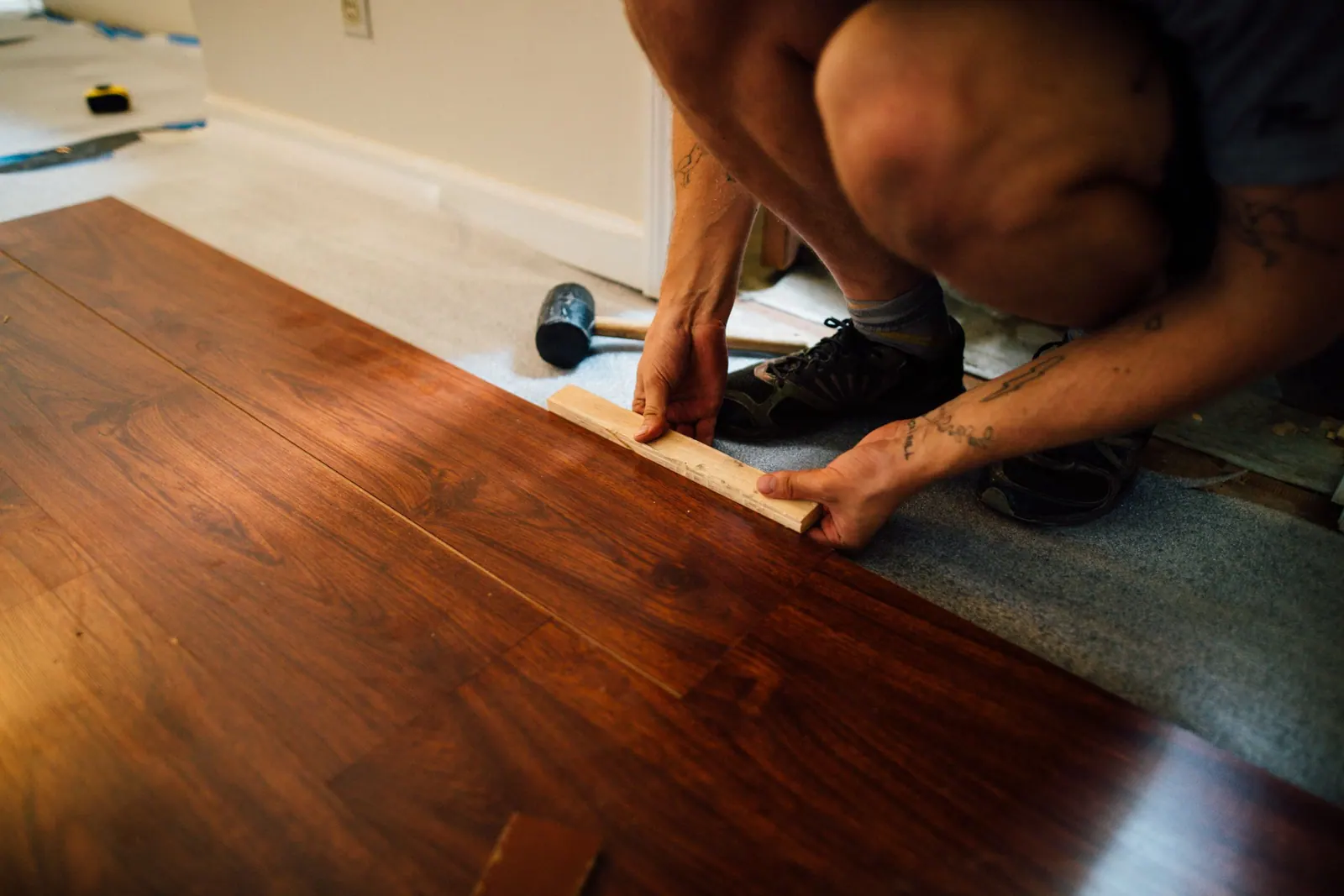
Screeding, levelling, subfloor preparation and laying hard flooring are alteration of a building or structure, so they are construction operations and inside CIS. Where the work forms part of constructing a new dwelling it can be zero-rated for VAT, in the course of construction and before completion; on an existing occupied dwelling it is standard rated.
HMRC's positions on a number of specific items — carpet fitting among them — appear in CIS 340's appendices rather than in the statute. Our verified reference deliberately does not publish an item-level "in or out" list beyond Finance Act 2004 s74, because those appendices were not read in full. So rather than assert a treatment, we would check Appendix C against your actual contract before advising. That is a better answer than a confident one that turns out to be wrong on the only job where it mattered.
What we can say with certainty is the VAT position on carpets, because it is not in an appendix: carpets are inside the builders' block of non-qualifying goods. They stay standard rated even when supplied alongside zero-rated new-build work, in the same list as fitted furniture and separately hired plant or scaffolding.
So a flooring invoice on a new build can carry a zero-rated element — the screed, the preparation, the labour on qualifying work — and a standard-rated element for the carpet, on the same job. If the invoice does not separate them, the treatment cannot be justified.
The deduction is charged on the payment less materials you directly incurred, consumable stores, fuel other than fuel for travelling, plant hire, the cost of manufacture or prefabrication, and the VAT you charged. Travel and subsistence stay in. And where the contractor buys the materials and recharges them, you have not directly incurred them, so no reduction is due at all.
If the deduction is costing you cash, gross payment status is the fix rather than a workaround — the turnover test is £30,000 of relevant payments net of VAT and materials for a sole trader, and the compliance test, which since 6 April 2024 includes VAT, is the part that needs preparing for.
Because we have not verified it against a primary source. Section 74 does not resolve it, and HMRC's position on specific items like this sits in CIS 340's appendices, which our research did not extract in full. Publishing a confident answer we had not checked would be worse than useless on the one job where it mattered — so we flag it and check it against your contract instead. What we can tell you without qualification is that fitting is an alteration of a building and that carpets themselves sit in the builders' block for VAT, so the rate question has an answer even where the CIS one needs checking.
No. Carpets sit in the builders' block, which is the list of goods that do not take the same rate as zero-rated or reduced-rated construction services even when supplied with them. Fitted furniture and separately hired plant or scaffolding are in the same list. So on a new dwelling the screed can be zero-rated and the carpet standard rated on one invoice. Fitted furniture and separately hired plant or scaffolding are in that same block, which is why a single supply-and-fit figure across a mixed job is so hard to defend afterwards.
It is part of the construction operation where it is preparatory to the flooring works — section 74(2) covers operations integral to, preparatory to, or for rendering complete the construction works. What matters for your deduction is that materials you directly incurred, consumable stores and plant hire are identified on the invoice, because those are what reduce the base. Travel and subsistence do not reduce it — fuel is excluded from the deduction base except fuel for travelling, which stays inside it.
Not for a private householder — the reverse charge requires the customer to be VAT registered and CIS registered. It applies when you subcontract to a builder or main contractor who is both, and who has not notified you in writing that they are an end user or intermediary supplier. Absent that notification the reverse charge is the default. With a householder you charge VAT at the applicable rate in the normal way, and there is no CIS deduction either, because a private individual is not a contractor.
We act for trade businesses everywhere in the UK and work with you remotely, so your postcode does not decide whether we can help. Your CIS and VAT position does not change when you cross a border either — but the building safety rules and the levy do, which is what the area pages cover.
Three months of statements or returns, and a straight account of what is wrong and what it is costing.