Tiling is alteration and repair of a building, so it is inside CIS. Materials are a real share of the invoice here, and adhesive and grout are excluded as consumables on top — which means an itemised invoice is worth money.
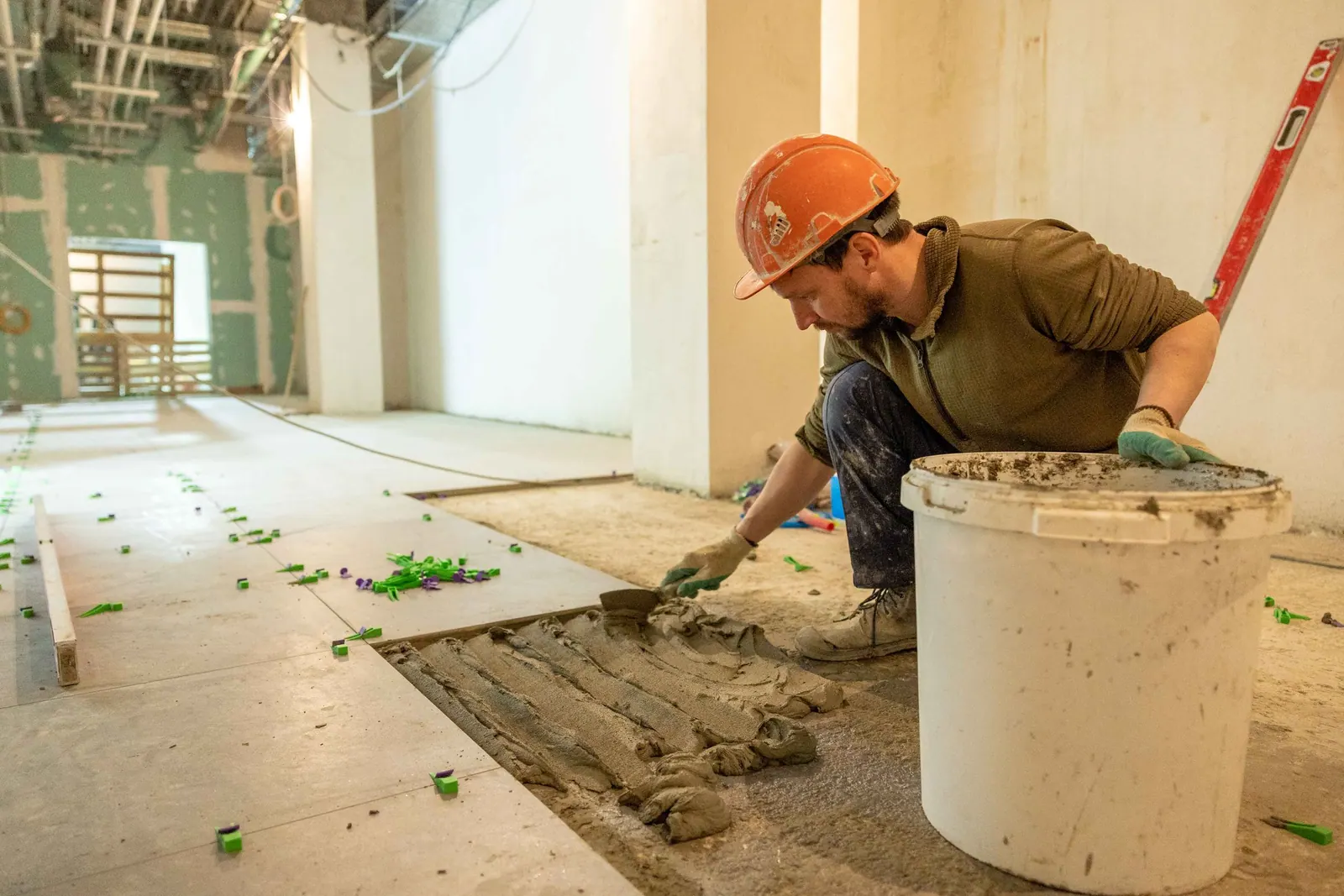
Tilers · CIS scope
Tiling is alteration and repair of a building or structure, so it is a construction operation and inside CIS. Where it forms part of constructing a new dwelling it can be zero-rated for VAT, in the course of construction and before completion; on an existing occupied dwelling it is standard rated at 20%.
What matters commercially is that this trade has two separate exclusions available. Tiles, trims and backer boards you buy yourself reduce the payment subject to deduction as materials you directly incurred. Adhesive, grout, sealant and spacers reduce it again as consumable stores, which are excluded in their own right.
Both only work if they are identified. An invoice showing a single supply-and-fit figure gives the contractor nothing to exclude — and the contractor is the one who has to justify the materials figure to HMRC, so the likely outcome is a conservative estimate rather than your actual cost.
Tiling a bathroom in a new house, before completion, can be zero-rated. Tiling the same bathroom in an existing occupied house is standard rated — including where it forms part of an extension, which is the most common mis-rating in the trades. A qualifying conversion can attract 5%: a changed number of dwellings, premises never used residentially or not for ten years or more, or a dwelling empty for two years or more.
Where the figure is withheld or looks inflated, HMRC expects the contractor to make a reasonable estimate of the cost of materials rather than accept your number.The deduction is charged on the payment less materials you directly incurred, consumable stores, fuel other than fuel for travelling, plant hire, the cost of manufacture or prefabrication, and the VAT you charged. Travel and subsistence stay in. And where the contractor buys the materials and recharges them, you have not directly incurred them, so no reduction is due at all.
If the deduction is costing you cash, gross payment status is the fix rather than a workaround — the turnover test is £30,000 of relevant payments net of VAT and materials for a sole trader, and the compliance test, which since 6 April 2024 includes VAT, is the part that needs preparing for.
It does not greatly matter, because both are excluded from the payment subject to deduction — materials you directly incurred are excluded, and consumable stores are excluded separately. What matters is that they are identified rather than absorbed into a single figure, because an unidentified cost cannot reduce anything. Fuel other than fuel for travelling and plant hire come out on the same basis, while travel and subsistence stay inside the payment subject to deduction. An invoice showing adhesive, grout and trims as a single materials figure with purchase invoices behind it is enough; one that shows nothing is not.
Only if it is genuinely in the course of constructing a new dwelling, before completion, and by a person with “person constructing” status. Tiling a bathroom in an existing occupied house is repair, maintenance or alteration and is standard rated at 20%, including in an extension. A qualifying conversion can attract 5%. That covers a changed number of dwellings, a non-residential conversion where the premises have not been used residentially for ten years or more, and a dwelling empty for two years or more — each needing its own evidence.
Generally not. The reverse charge requires the customer to be VAT registered and CIS registered, so work for a private householder falls outside it and you charge VAT normally. It bites when you subcontract to a builder or main contractor who is both and has not notified you in writing that they are an end user. Once that notification is on file you can issue a normal VAT invoice and need not seek further evidence of the customer's status. Where the work is genuinely zero-rated new build it is outside the reverse charge regardless, because only standard and reduced-rated supplies can be caught.
Very little. On a labour-only tiling invoice there are no materials you incurred, no plant hire and few consumables, so the deduction is charged on close to the whole figure. Travel and subsistence do not help; they stay inside the base. That is the position where gross payment status is worth the most. The turnover test is £30,000 net of VAT and materials for a sole trader, which a full-time tiler clears comfortably — the compliance test is the real hurdle. Since 6 April 2024 that test covers VAT as well as CIS, PAYE, income tax and corporation tax.
We act for trade businesses everywhere in the UK and work with you remotely, so your postcode does not decide whether we can help. Your CIS and VAT position does not change when you cross a border either — but the building safety rules and the levy do, which is what the area pages cover.
Three months of statements or returns, and a straight account of what is wrong and what it is costing.