
Roofing is materials-heavy, and the deduction is only charged on the part of the payment that is not materials you bought yourself. Which makes who buys the tiles a cash-flow decision with a tax consequence.
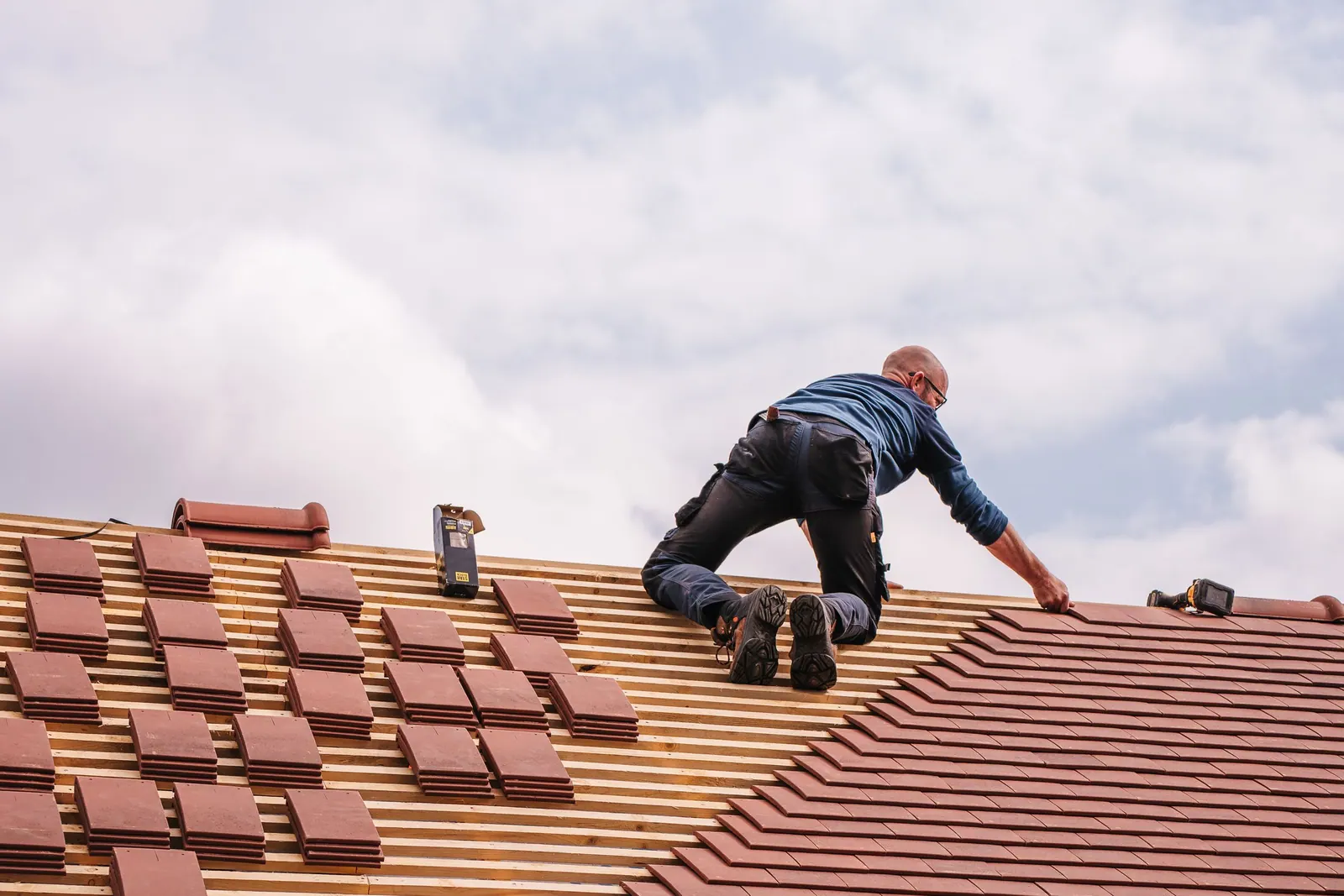
Where the money moves
Roofing sits inside CIS without much argument: construction, alteration, repair and extension of buildings and structures is a construction operation, and scaffolding is separately listed as in scope where you provide it as part of the works.
What makes roofing different from a labour-only trade is the materials proportion. Deductions must only be made from the part of the payment that does not represent the cost of materials the subcontractor directly incurred — so on a materials-heavy trade, getting that figure right and evidenced is worth real money every month rather than at the year end.
A £12,000 re-roof with no materials shown suffers a 20% deduction of £2,400 and pays you £9,600. Show £5,000 of tiles, battens, felt and lead that you bought and can evidence, and the deduction is charged on the remaining £7,000 of labour — £1,400. You are paid £10,600 for the same job. If the contractor had bought those materials and recharged them, the deduction would still be £2,400, because you would not have directly incurred them.
Alongside materials, these also come out of the base: consumable stores; fuel other than fuel for travelling; plant hire; the cost of manufacture or prefabrication; and the VAT you have charged. Travel and subsistence stay in.
Whether a job is a construction operation decides two things at once, not one. It decides whether the payment is inside CIS — and because the VAT domestic reverse charge takes its scope from the CIS definition, it decides the VAT treatment on the same invoice. Get the scope question wrong and you get both wrong together.
Plenty of roofing subcontractors let the main contractor supply materials because it removes the working-capital burden of buying them. That is a legitimate choice, but it should be a choice made knowing that it also removes any reduction in the CIS deduction — so the cash you save on the merchant account you lose again to a larger deduction, and you lose it for longer, because the deduction is only recovered after the year end.
Where you do buy them, the evidence matters. HMRC's instruction to the contractor where a materials figure looks overstated is to ask for satisfactory cost information, and to make a reasonable estimate if it is withheld or looks inflated. An invoice that says "materials £5,000" with nothing behind it invites exactly that estimate.
If you are self-employed you deduct the actual cost of tools, equipment and protective clothing. The flat rate expenses — £80 a year for roofing felt and asphalt labourers, £120 for other building workers — are for employees, need no receipts, and are claimed online or in box 18 of the SA102. Where an employer reimburses part of the cost, that amount is deducted from the flat rate; where the employer pays all of it, no relief is due.
For the van and the bigger kit, the Annual Investment Allowance gives 100% relief on up to £1 million of plant and machinery for sole traders, partnerships and companies alike, and from 1 January 2026 a new 40% first-year allowance is available to unincorporated businesses too on new and unused main-rate plant. The main-rate writing-down allowance fell from 18% to 14% from April 2026, which matters to anyone carrying a pool.
Yes. Construction, alteration, repair and extension of buildings and structures is a construction operation under section 74(2), which covers a re-roof, a repair and a new roof alike. Scaffolding is separately listed as in scope too, so where you provide it as part of the works it is inside the scheme rather than alongside it. Roofing felt and asphalt labourers also have their own employee flat rate expense of £80 a year, which is worth telling site staff about even though the self-employed cannot use it.
More than to most trades, because the materials proportion in roofing is high. The deduction is only charged on the part of the payment that does not represent the cost of materials you directly incurred — so tiles, slates, felt, battens and lead you bought yourself come out of the base. On a £12,000 job with £5,000 of your own materials, a 20% deduction falls from £2,400 to £1,400. The same £5,000 bought by the contractor and recharged to you produces no reduction at all, because you did not directly incur it.
Only if you are employed. The flat rate for roofing felt and asphalt labourers is £80 a year, and £120 for other building workers — available to employees, needing no receipts, claimed online or in box 18 of the SA102. They are not available to the self-employed, who deduct the actual cost of tools and equipment instead. If your employer reimburses part of the cost that amount comes off the flat rate, and if they pay all of it no relief is due.
It can be, if it is genuinely in the course of construction of a new dwelling and before completion. Once the building is finished and occupied, roofing work on it is repair, maintenance or alteration and is standard rated at 20%. The distinction is about the stage of the building, not the size of the job — and because zero-rated supplies sit outside the reverse charge, the two answers differ on more than the rate. A roofer usually has a large materials element too, which reduces the CIS deduction base considerably — provided the tiles were bought on your account and are identified on the invoice.
We act for trade businesses everywhere in the UK and work with you remotely, so your postcode does not decide whether we can help. Your CIS and VAT position does not change when you cross a border either — but the building safety rules and the levy do, which is what the area pages cover.
Three months of statements or returns, and a straight account of what is wrong and what it is costing.