
A rewire is inside CIS. Fitting a burglar alarm or CCTV is not — section 74(3) excludes security systems by name. Same van, same day, two regimes, and the split decides your VAT as well as your deduction.
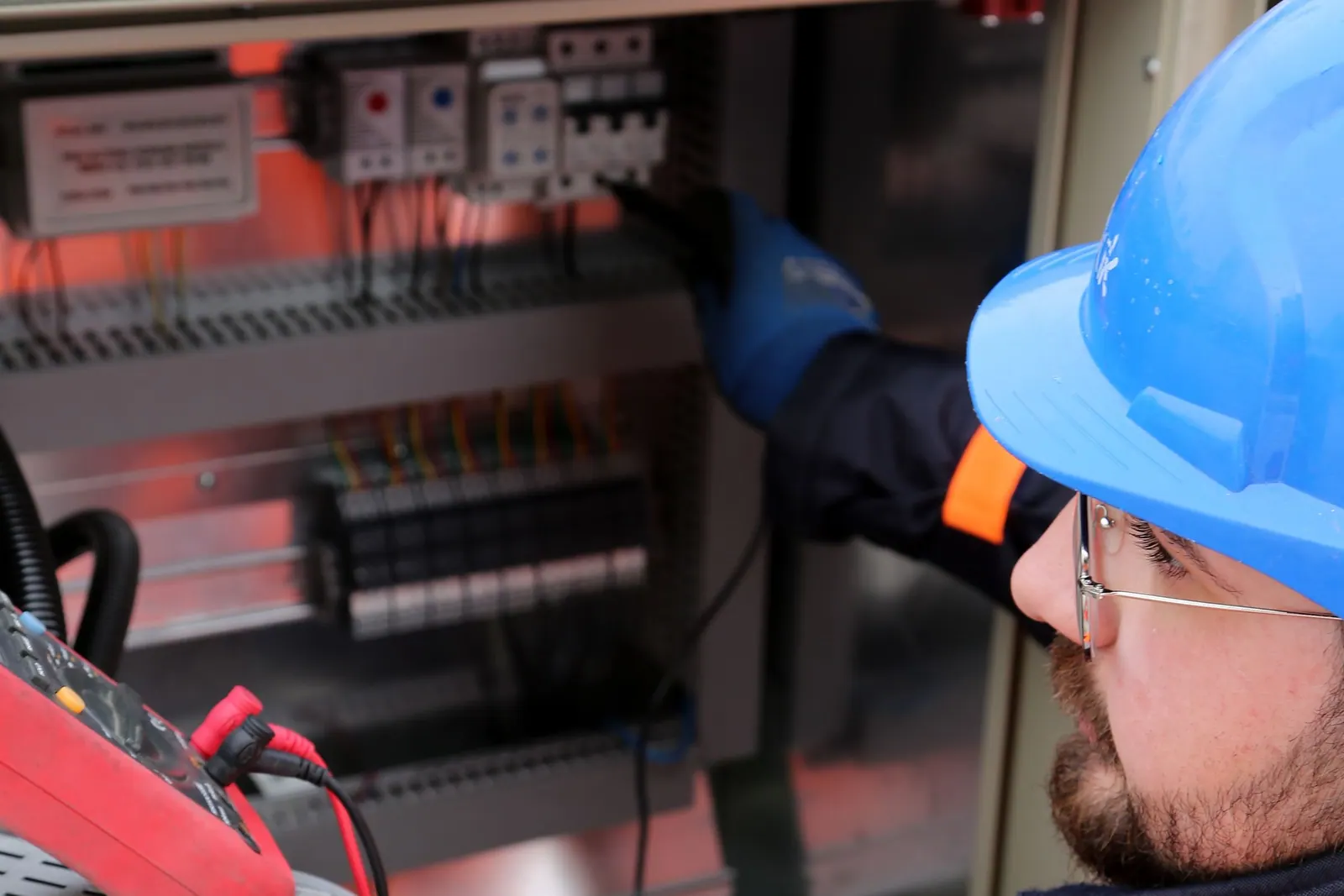
Most electricians assume they are simply "in CIS". The more useful answer is that part of what you do is and part of it is not, and the boundary is written into the statute rather than left to judgement.
Inside, under section 74(2) of the Finance Act 2004: the installation in any building or structure of systems of heating, lighting, air-conditioning, ventilation, power supply, drainage, sanitation, water supply or fire protection. Plus everything else that is ordinary construction — alteration, repair, extension — and the operations that make it possible, including site clearance and scaffolding.
Outside, under section 74(3): the installation of security systems, including burglar alarms, closed-circuit television and public address systems. Also the manufacture of components for power supply, lighting, ventilation, drainage or fire protection systems, and their delivery to site.
Fire alarm in, burglar alarm out. That is genuinely how it reads, and it is the opposite of what most people guess.
Whether a job is a construction operation decides two things at once, not one. It decides whether the payment is inside CIS — and because the VAT domestic reverse charge takes its scope from the CIS definition, it decides the VAT treatment on the same invoice. Get the scope question wrong and you get both wrong together.
A rewire for a main contractor is a construction operation: it is CIS-reportable, so a deduction applies unless you hold gross payment status, and the reverse charge applies if both of you are VAT and CIS registered and the customer is not an end user. A CCTV installation for the same customer is neither — normal VAT, no CIS deduction.
Where both appear on one job, the practical answer is to invoice them so the treatment is visible rather than blended. A single line saying "electrical works" across a rewire and an alarm install is a figure nobody can later justify — including you.
Deductions are only made from the part of the payment that does not represent the cost of materials you directly incurred. Cable, containment, boards and accessories you bought yourself come out of the deduction base. The same materials bought by the contractor and recharged to you do not, because you did not directly incur them.
What stays firmly inside the base is travel and subsistence. A mileage line or a night away on a distant job has the deduction taken off it in full, and nothing bounces when that is wrong.
Installing energy-saving materials in residential accommodation is zero-rated until 31 March 2027 and reverts to 5% from 1 April 2027. Solar panels, ground, air and water source heat pumps, micro combined heat and power units, insulation, draught stripping and controls for central heating and hot water are all covered — and batteries for storing electricity, smart diverters and groundworks for heat pump pipework were added on 1 February 2024. The relief only applies where you install; supply-only is standard rated.
Because zero-rated supplies sit outside the reverse charge, that question comes first. If the supply is zero-rated there is no reverse charge to apply.
Installing systems of power supply, lighting and fire protection in a building or structure is expressly a construction operation under section 74(2) of the Finance Act 2004, so a rewire, a consumer unit, a lighting installation or a fire alarm installation is inside CIS. So is installing heating, ventilation and air-conditioning systems, which is where a lot of electrical work sits in practice. What is outside the scheme is the installation of security systems — burglar alarms, CCTV and public address — which section 74(3) excludes by name.
Because section 74(3) expressly excludes the installation of security systems, including burglar alarms, closed-circuit television and public address systems. That is on the face of the statute. It means the same electrician, on the same day, can do one job inside CIS and one outside it, and the two need different treatment on the invoice. Note that fire protection is IN and security is OUT, which is the opposite of what most people assume.
The manufacture of components for systems of power supply, lighting, ventilation, drainage or fire protection, and their delivery to site, is excluded. Installing them is not. So if you build up a board off site and then install it, the installation is a construction operation; manufacturing and delivering the board on its own would not be. Where a single contract covers both, the sensible thing is to establish the treatment in writing before invoicing rather than after. The exclusion is worth using, because the cost of manufacture or prefabrication comes out of the payment subject to deduction in the same way materials do.
Yes, and there is a date on it. Installing energy-saving materials in residential accommodation is zero-rated from 1 May 2023 until 31 March 2027, and reverts to the 5% reduced rate from 1 April 2027. Solar panels are covered, and batteries for storing electricity and smart diverters were added on 1 February 2024. The relief applies only where the materials are installed — supply-only is standard rated. And because zero-rated supplies are outside the reverse charge, the zero-rate question has to be answered before the reverse charge one.
We act for trade businesses everywhere in the UK and work with you remotely, so your postcode does not decide whether we can help. Your CIS and VAT position does not change when you cross a border either — but the building safety rules and the levy do, which is what the area pages cover.
Three months of statements or returns, and a straight account of what is wrong and what it is costing.