
Site clearance, earth-moving, excavation, foundations and drainage are all named in the statute. And plant hire comes out of the deduction base — which matters more on this trade than on any other, because plant is where the value is.
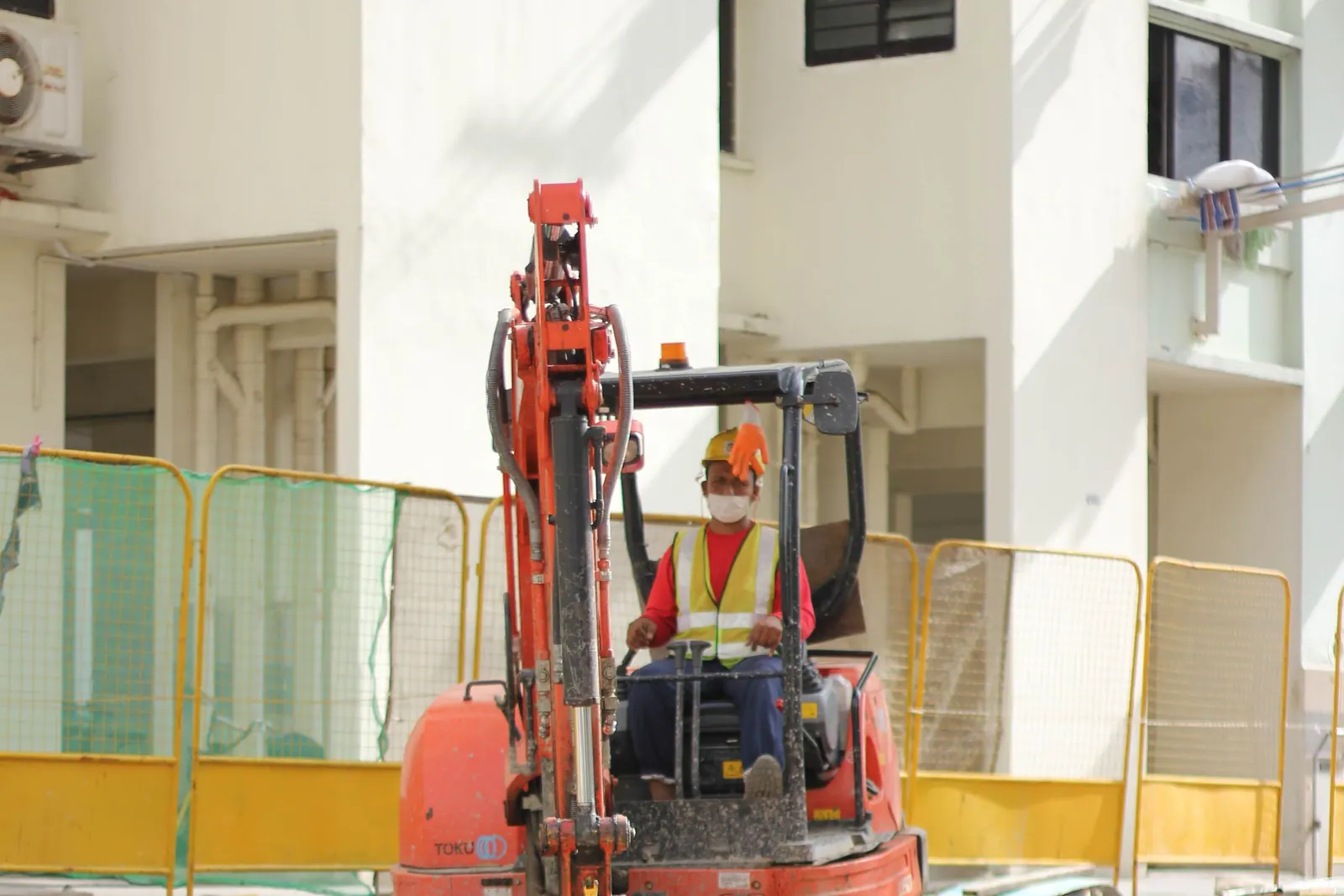
Groundworkers · CIS scope
Section 74(2) is unusually explicit about groundworks. The operations integral to, preparatory to, or for rendering complete the construction works include site clearance, earth-moving, excavation, tunnelling and boring, foundations, scaffolding, site restoration, landscaping, and the provision of roadways and other access works. Works to the land are covered in their own right too: roads, drainage, water mains, wells, sewers, reservoirs, and installations for land drainage or coast protection.
So the scope question is easy. The money question is plant.
Plant hire costs come out of the payment subject to deduction. On a groundworks invoice where a large share of the value is excavators, dumpers, rollers and attachments, that exclusion is worth more than the materials exclusion is to most trades — and it only works if the invoice identifies it. A single line reading "groundworks" gives the contractor nothing to exclude, so the deduction is charged on the whole figure.
The same goes for consumable stores and fuel — with the specific exception that fuel for travelling stays inside the base. Diesel burnt in a machine on site is a consumable; diesel in the pickup getting there is not excluded.
A business that is not itself construction becomes a deemed contractor where expenditure on construction operations exceeds £3,000,000 in the period of one year ending with that time. It is a rolling twelve-month test, in force in that form since 6 April 2021. A developer or a large landowner commissioning groundworks can cross it without ever thinking of itself as a contractor — and then owes the full set of contractor duties on what it pays you.
The deduction is charged on the payment less materials you directly incurred, consumable stores, fuel other than fuel for travelling, plant hire, the cost of manufacture or prefabrication, and the VAT you charged. Travel and subsistence stay in. And where the contractor buys the materials and recharges them, you have not directly incurred them, so no reduction is due at all.
If the deduction is costing you cash, gross payment status is the fix rather than a workaround — the turnover test is £30,000 of relevant payments net of VAT and materials for a sole trader, and the compliance test, which since 6 April 2024 includes VAT, is the part that needs preparing for.
It changes what you are supplying. Hire of plant with an operator is generally the provision of labour and plant for construction operations, and CIS 340 confirms the provision of labour for construction operations is in scope. Bare plant hire is a different supply. Either way, plant hire costs you have incurred are among the items that reduce the payment subject to deduction — so identify them. CIS 340 confirms that the provision of labour for construction operations is inside the scheme, which is why an operated-plant supply is treated so differently from a bare hire.
Site clearance, earth-moving and excavation are expressly construction operations, and site restoration is too, so removing spoil arising from those operations is part of carrying them out. Where a haulier is separately engaged purely to move material the position depends on what that contract is for — worth establishing rather than assuming, because the manufacture and delivery of materials to site is expressly excluded and pure haulage sits close to that line. Get the contract to say what is being bought — muckaway as part of excavation, or haulage as a standalone service — because the deduction and the VAT both follow that answer.
Drainage forming part of the construction of a new dwelling can fall within the zero rate, in the course of construction and before completion. Drainage work on an existing occupied dwelling is repair or alteration and is standard rated. Land drainage as works to the land is a construction operation for CIS either way — the CIS answer and the VAT answer are separate questions on the same invoice. Land drainage, water mains, sewers and reservoirs are all listed as works to the land in section 74(2), so scope is rarely the difficulty here — rating is.
It changes which relief applies rather than whether you get one. Hired plant reduces the CIS deduction base. Owned plant does not, but attracts capital allowances — the Annual Investment Allowance gives 100% on up to £1 million, and from 1 January 2026 a new 40% first-year allowance is available to unincorporated businesses as well as companies on new and unused main-rate plant. The main-rate writing-down allowance fell from 18% to 14% from April 2026. That cut is the part that affects a plant-heavy business most, because relief on anything already in the main pool now unwinds more slowly.
We act for trade businesses everywhere in the UK and work with you remotely, so your postcode does not decide whether we can help. Your CIS and VAT position does not change when you cross a border either — but the building safety rules and the levy do, which is what the area pages cover.
Three months of statements or returns, and a straight account of what is wrong and what it is costing.